I found this photographer recently through a friend. One of my good friends, Brad, sent me a link to this guy's website and I absolutely loved his work from the start. He's working out of San Diego. Turns out my friend Brad is actually working for him in his studio, just an extra hand around the place, setting up lights, etc. I'm extremely jealous, because Brad is trained as a Graphic Designer, but landed this killer job through his sister. I'm in total envy. He's where I want to work, and working for a photographer doing the exact work I want to do. I really want to shot sports, underwater photography, etc. But I'd also like to do commercial photography, such as portraits, like Tim's. The thing I like about them is the editing, and the subject matter. He gets to interact with professional athletes and come up with some really amazing photographs, they're so sharp, colorful, his sense of lighting is also really nice, which is very important because light is photography, obviously. Its hard to tell how he does some of his photographs, for example, a woman running out of the water with goggles on. I'm not sure how the lighting was done with that, definitely a strobe light, but how did they get the light so close and the fill is confusing to me too. Probably a pretty simple concept, i'm just over-thinking because of the proximity to water. I think I could come up with some results like that, with the editing and the lighting, just need more time to experiment in the studio by myself. Overall, Tim Tadder's photographs just really appeal to me, they look immaculate, but also bright and exciting in the imagery. Again, the lighting is really important to me, in some of the photos its more obvious than others, but I really like what he's doing with the quality of light and its design. Just by looking at his photographs, I start to pick apart different aspects, like the direction its coming from, what he may be using with the strobe (soft box, grid, foam core, reflector). Sometimes to get a great photo, all you need is a main light (strobe or natural light), and a big piece of foam core to bounce back some light to soften the shadows. I think thats about all I have at the moment, at first look, but I learn more and more just glancing through is photographs. Not to mention, i'm going to pick my friends brain so I can learn more. If I can get some money together, I may even try and visit San Diego, go hang out with my boy Brad for a week or so and go meet up with Tim Tadder, check out his studio and introduce myself. It'd be a great way to get myself out there. I really respect his work, and he's exactly where I want to be when I establish myself as a professional, perfect location, great photographs.
www.timtadder.com
Showing posts with label photographer. Show all posts
Showing posts with label photographer. Show all posts
Tuesday, May 6, 2008

Monday, March 3, 2008
Al Bello


One photographer that I have particularly been interested with as of late is Al Bello. There is a specific body of work that he had created that really got me interested into the realm of photojournalism. He had recently traveled to Puerto Rico to document cockfighting events, which a perfectly legal in this country. There was just so many different aspects of the fight that were covered that I would never have imagined. The single most powerful image in the collection was a closeup of one of the owners taking a pair of scissors to the roosters comb, cutting it clean off. The idea is that removing the comb from the roosters head increases its speed and vision, giving it an advantage in the fight. The feathers from the torso down to the feet are also removed, most likely for the same reason. To me, it is painful to understand that these animals can live and die purely for entertainment. The winner is praised and wounds are treated, while the loser dies, just to be thrown away as any other waste, lying in a grave of beer cans and cigarette butts.
Overall, the imagery within this body are just so colorful and diverse, they show every aspect of cockfighting that you could imagine, as a newcomer or expert. I really enjoyed the idea that I can get so much insight to the sport just by gazing through twenty images. Within a matter of moments my understanding of the sport and culture has risen to greater heights. These are the kinds of images I want to take. I feel I've been so stuck on shooting stock photos that I've steered away from using my creative eye and shot strictly to what could be seen in Sports Illustrated or a newspaper. I need to go back to where photography could be whatever I wanted it to be, I could shoot a subject and there was no telling how the final image would come out. I want to tell stories with my photos, not just capture one single moment in time, but have the ability for a sequence of images to give people the ability to create the narrative simply through my visual interpretations.


Wednesday, October 10, 2007
Donald Miralle


Looking through the Pictures of the Year
website, I found another interesting photographer by the name of Donald Miralle. There are multiple things that came out through his work that instantly hit me. Color in his images just really pop, he really has a great eye for balance within the composition. Balance as in color is what i'm getting at right now. I feel its important within an image to have those splashes of color that draw the viewers eye. It may be easier these days, as sports uniforms are getting more colorful and crazy, but there are so many places from a sporting event you can grab color from, whether its the crowd, the gatorade cooler on the sidelines of the football game, the light-show before the big game. Color just surrounds us, and I feel its the job of the photographer to take this world filled with chaos and color, and organizing them within a composition so that its balanced, and orchestrated. Where the color appears and the focus can say a lot about how the photo will be seen. You may not want bright colors in the background of a f2.8 photograph, the color may be distracting. The photographer really does compose the world around them, from the angle they're shooting, the lens, lighting situations, so many aspects affect the outcome of the final image.
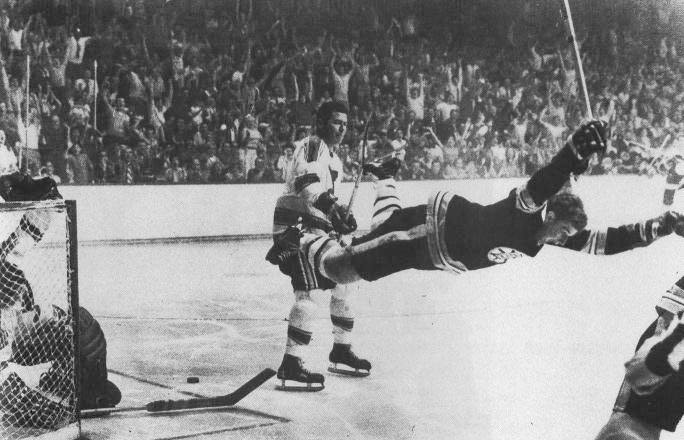
More into the actual photographer, I wanted to discuss one of his images specifically. Because I couldn't find a name, I'll just call it "USC Receiver 82", there is so many qualities that make this a great photograph. First and foremost, the lighting makes this image. Really the situation of this lighting is great timing and an accident simultaneously. The player is leaping into the air to catch a ball thrown into the end zone. At the same time, theres a beam of sunlight peaking through the clouds, which you really can't plan for, when you're following a sporting event. I would almost say the photo was destiny, where it was supposed to be taken. Its almost an act of divinity, the photograph embodies the emotion of sports, at the same time, the light passing through the class could signify a deity. The photo resembles a Simon Bruty photo from one of my previous posts, which showed the tennis player playing amongst the light. The light also plays a role to soften the background, where the audience awaits the play, sitting in the shade, as the USC player basks in the sunlight, while making an athletic move. This is one of those images that, to me, becomes one of those notorious photographs of its time, like Muhammah Ali standing above his knocked out opponent. Its timeless, it shows the emotion, action, and the tradition of sports.
There was another image of his that I specifically liked, the frame is taken underwater, I'm assuming Miralle is underwater, but at the same time, it could possibly be a remote camera, if you can use a remote camera underwater, that I have no idea. The frame is filled with a blue hue that resembles the water you'd see in a photo of the Caribbean. An olympic diver cuts through the water like a hot knife through butter. I know, what an unoriginal metaphor, but whatever. The trail of oxygen (i guess thats what it is), follows behind the diver. The image gives the diver a special presence, as if they have supernatural powers. It just amazes me how you can give different perceptions of an object or person, simple by shooting different situations. Obviously shooting people diving into the water has been done before, but the framing and timing of the photograph gives this genre of photograph a completely different feel. You almost forget the person is a swimming, and begin to believe the flying. The texture of the water, lighting, hue, is all present within the sky, given the situation, so its really not so far to imagine, besides that fact we can't fly. Looking through Donald Miralle's photography just makes me think, there are so many photographs out there to take than what we typically see in sports, so much more going on. Really, its just about the journey, continuous searching of "that photograph", much like the surfer is always looking for that wave of his life. As a photographer, I just need to keep searching and shooting, it will all fall into place.


Monday, September 24, 2007
Steve Christo

I recently discovered a sports photographer by the name of Steve Christo, who shoots for the Sydney Morning Herald in Australia. I am really drawn to his work, so much attention to the framing, background, lots of detail that really keeps me intrigued about his photographs. Lately, I've been doing a lot of research, mostly surfing websites such as POYi and the Best of Photojournalism, in search of new photographers to inspire me. I find the more photographers I study, theres always a new style or perspective you learn about, which really helps when I go to shoot an event, it keeps the ideas flowing throughout the day. Christo is extremely talented, and decorated, as he's won 3 awards for POYi awards of excellence in sports photography. It always seems to be true, if you study the best, you know how high the bar is set, and where you need to be in order to get to the top. With any realm of art, you need to be in the top of your game, and constantly out there pushing the envelope. At this point in my sports photography career, i'm still new to the game, but i'm making connections, shooting more events, and most importantly, becoming more and more motivated to being the best, I really feel that I've found my niche, the perfect marriage of my love for sports and art. I couldn't be happier.
Christo's work completely embodies all the aspects I'm striving to have within my photography. He really has a great eye for compositions, decisive moment, and color. These three aspects I find especially important. Composition is a talent, I have always found myself to have a good eye with photography, and art in general. The problem comes when getting composition while shooting a sports moment, the action is moving so fast, how do you shoot a key moment, and get a great framing at the same time? Its a real challenge, but its exciting. Decisive moment is all about timing, experience, and confidence. Being familiar with the specific sport you're shooting really helps a lot with this aspect, if you know the quarterback is going to hand off the ball to the running back, it makes your job a lot easier. Color is probably my most favorite aspect in art. I really feel that color is what grabs a viewers' attention when filling through a magazine or newspaper. I've always been attractived to vibrant colors such as orange, blue, etc. Being able to fill your frame with colors and contrast between background and foreground is something I always try to contain in my images. I find that shooting in certain areas, this notion is a little harder to bring into my images. Richmond is kind of a smoggy, dirty place, and most of the sporting venues here are surrounded by construction sites or main roads, which means my background is typically filled with cars and fences, which I don't particularly like. But, I gotta start at the bottom, work my way up, its about problem solving, the more I shoot, the more I will be able to solve issues such as these. I've already found that shooting at the top of the bleachers at Sports Backers helps a lot in isolating the urban environment from the frame. You get more grass and less junk, which ultimately makes for a better image, and less distracting, softer background.


Thursday, September 13, 2007
Simon Bruty

I wanted to talk about a specific photo that I can across. Even though tennis isn't one of my favorite sports, I've actually been turned to it more lately. This is a photograph taken by Simon Bruty that I really enjoyed. To me, this photo really symbolizes the essence of singles tennis. The use of lighting in the later afternoon gives a sense of loneliness, with the shadow stretched, diagonally across the frame, accompanied by only the referee and his opponent. I really feel like the lighting absolutely made this image. Getting the right exposure could have been a little challenging, maybe trial and error, but the overall gives a good feel of balance in the image. There are two color temperatures within the photo, most of the turf is blanketed by the bright afternoon light, but the majority of the figure hides in the shade, except for the orange highlights through the hair. The lines and geometry were really strong throughout the frame, I always like adding a sense of perspective and some interest with the bright white lines jumping out from the shadowed, green turf. The bright colors give a high contrast between the figure and the background, allowing the viewer to concentrate on the athlete, rather than getting lost in the background.
Its a little too soon to think about tennis season here at VCU, but I'm already getting ideas for shooting how I could shoot the sport. I really like the ideas used by Bruty, I've always liked to include a sense of location and geometry. Using perspective could be an effective way to bringing out interesting aspects of the game. This could also be applied to other sports, obviously. At VCU (Cary St. field), its typically a little more difficult to use the lines of the game in the photo, because the field is so cluttered with everything else. I plan to use more perspective when shooting at Sports Backers in the future, I'm just not sure I'll have the equipment to do so during the UNC game, the game starts at 7PM, which holds problems because of the low light. I'm praying the lights on that field are sufficient for photographing during the late afternoon to evening, I didn't have so much luck at Cary St. field, but theres no way of telling until you go out and do it. I'm pretty anxious to go out and shoot another game. Been kind of antsy about it, just haven't had the resources to go to game other than VCU sports at the moment. Want to make it out to some Richmond Braves games, maybe even Univ. of Richmond sports, just dont have the transportation at the moment. Maybe I could come out for field hockey practices during the daytime? Maybe shooting intramural sports, or pickup soccer games. All these are good points to bring up during my next meeting (tomorrow). I'm going to leave off at that.
Thursday, September 6, 2007
Peter Read Miller
I found a link that I wanted to post up real quick, it features tips and techniques for shooting football. Obviously, I won't be shooting too much football at VCU, but the things he says a really important to me. He makes some good points, as a pro photographer, but also makes me think more about the different aspects I could be focusing on when I shoot games. Since it was my first batch of soccer games to photograph, I did bounce back and forth between subjects because I was really anxious to try out my new lens. I think next time I need to keep his ideas in the back of my mind, maybe even have a small sketchpad with different subjects to concentrate on, thinks like: offense, defense, portraits, reactions, players not in game, coaches. Taking these considerations before I start shooting, I can better focus on a specific photo I want to get within the game, soccer players jumping for a header, player running past defense, goalie jumping for ball, etc. Plan my shots ahead of time, so I'm not shooting random players, or just following the ball. Anyways, this got longer than I expected. Here is the link.
Peter Read Miller

Just looking through his images, really inspires me to keep shooting and work towards my goal of being a sports photographer. Why not? Its a perfect mix of sports and art, you interpret the event with the manipulation of the camera. I can only imagine capturing college football for a job, the athleticism, sense of atmosphere. So many aspects make the photo below just incredible.
I've taken a lot of thought into attending one of these lecture/workshops taught be Peter Read Miller, or one offered by Sports Shooter Academy, both have highly respects individuals teaching the events. I just really want to run with it, give it everything I can. If I dont' make it, I'll at least know I gave it my best. I honestly think that this could be my niche though, I love the idea of photographing sports because its utilizing your technical skills with a camera, but you also get the excitement and unpredictability of sports. Being able to capture these events, the atmosphere, audience, its a perfect marriage. Not to mention I love the outdoors. I've invested a lot of time so far this semester, keeping on top of my classes, especially this one and "pro practice", I'm really just trying to learn the business end (to look out for myself in the future), and follow my dreams. Someone has to photograph the amazing images of locations and events that most only view through media, such as television. Why can't I be the one to bring the images to them?
Peter Read Miller

Just looking through his images, really inspires me to keep shooting and work towards my goal of being a sports photographer. Why not? Its a perfect mix of sports and art, you interpret the event with the manipulation of the camera. I can only imagine capturing college football for a job, the athleticism, sense of atmosphere. So many aspects make the photo below just incredible.
I've taken a lot of thought into attending one of these lecture/workshops taught be Peter Read Miller, or one offered by Sports Shooter Academy, both have highly respects individuals teaching the events. I just really want to run with it, give it everything I can. If I dont' make it, I'll at least know I gave it my best. I honestly think that this could be my niche though, I love the idea of photographing sports because its utilizing your technical skills with a camera, but you also get the excitement and unpredictability of sports. Being able to capture these events, the atmosphere, audience, its a perfect marriage. Not to mention I love the outdoors. I've invested a lot of time so far this semester, keeping on top of my classes, especially this one and "pro practice", I'm really just trying to learn the business end (to look out for myself in the future), and follow my dreams. Someone has to photograph the amazing images of locations and events that most only view through media, such as television. Why can't I be the one to bring the images to them?
Monday, August 27, 2007
Walter Iooss Jr.

One photographer I found that I would like to resemble in my work is Walter Iooss Jr.. As of now, I dont have his whole life story, but from the photos I've viewed, I find a lot of qualities that I hope to present through my own. There are a lot of things I admire about him, one being the amount of years he's worked in the field, just in Sports Illustrated alone, he's worked 40 years. His first assignment, as I've read, was in high school, where he was asked to follow Roger Maris in his attempt to break Babe Ruth's Home Run record. Thats a pretty exciting first assignment. I might also mention he's also covered 40 consecutive super bowls. More or less, in my career, I'd want to work to become as respected of a sports photographer as Walter Iooss has. I can only imagine covering such prestigous sporting events as those, might I add free admission.
I really enjoy the style that appears through Iooss's images, I feel it is very important for a photographer or artist to find their style. This is what sets them apart from the artists before them, and the ones after. I can't say I've even come close to finding mine, it all comes with the more experience you get, and lots of shooting. Sometimes you don't define a style and work within those boundaries, it just comes to people's attention over the extent of bodies of work, just kind of comes out of nowhere. To me, style is adapted, it happens from countless shooting, it comes like a second nature, its just how you view the world through your camera.
I find that Iooss uses a lot of color and environment within his images. For example, the photo at Fenway (second photo), uses the red lighting from the incandescent field lights and the red score board. In front of Jim Rice, the right fielder, there appears a haze, which seems to be the pitchers mound, framed at a lower angle. The framing and lighting help give the picture an evil, hellish mood, or just giving the theme that they are the Red Sox. Also, I love the touch of adding the old Fenway Park scoreboard, instead of using the low aperture to blur it out, adds a lot of history, which is flowing through the Red Sox's stadium.
I also really enjoy the last photo I have posted, which is Ken Griffey Jr.. Eventhough this isn't an "action" shot, I really liked Iooss's use of low angle and lighting to set the mood of the image. The use of color is what grabbed my attention, using the similar hues of blue, rather than maybe an orange from a sunset, which would give a greater contrast of colors. I like the use of blacks, how most of the figure seems to get lost in the bleachers behind, which doubles for the bat behind swung through the air. I can only assume this was a posted shot, because of the low angle and the reflection card that would've had to be used to get the detail of the face and clothing. But his ideas are great.
The first photo shows more action, and more use of depth, eventhough blurred out. I feel the low angle used in this shot gives more sense of field behind the player sliding into 3rd, using the green foreground and the blue bleachers in the back, theres a lot of color to help contrast with the player, allowing the action to stand out more. These simple devices such as: color, aperture, and atmosphere help draw the viewer in, personally gives me a better sense of being in the action, which I highly enjoy.
Overall, i guess to sum up my interests in Walter Iooss Jr., I just wish to create as impressive imagery as he has done throughout the years, maybe even gain close to the respect he has in the sports photography field. The possibilities of being surrounded by such sports and asked to document the experience only drives me to work more, in hopes that i can reach the same prestige.


Capturing History
Although I dont like Barry Bonds, and find him to be a cheater, I did find it interesting to see a short video, demonstrating a special sequence setup used by photographer Robert Hanashiro. This setup consists of 3 canon digital slr bodies, equipped with 600mm lenses, working as one to capture a sequence of Barry Bonds' record breaking swing. To be honest, I have no idea how they made this work, but i'm sure in the future, i'll understand this a little more. I just found this to be absolutely awesome, using such equipment as one system to capture history at 30 fps. Check out the video at the link below for a better understanding.
Bonds' 756 at 30 frames per second
Bonds' 756 at 30 frames per second
Friday, August 24, 2007
Thomas Boyd
So after class, i immediately decided to dive into some research. I always surround myself with sports, watching baseball, golf, whatever sport I can find, but the one thing I realized: I don't know anything about the influential sports photographers of our time. One photographer that I came across was Thomas Boyd, whose photographs I could really relate to, what type of photographer I wanted to become. One characteristic that I noticed throughout his images were that his timing is impeccable, every moment was captured to the exact second where the subject expressed emotion. Because of his website design, you cannot save images, or post URLs, but the website is here.
One photo I particularly enjoyed off the site was a woman competing in the high jump. The composition is nice, low aperture helped blur out the background, leaving a nice crisp foreground, allowing no confusion to the emphasis of the image. The bar is to separate the image, but tilted ever so slightly to create a diagonal rather than framing it level across the image. Making these conscious, artistic decisions gives the image more originality. I always find myself using rules such as rule of 3rds and using diagonals rather straight lines dividing the image, they've always seemed to ordinary and bland for my taste.
The expression on the woman's face is incredible, the look of giving everything you've got to assure you come out on top. Emotions are always present in sports, whenever you're pushing your body to the max. I find "game faces" to be an important part of sports photography, everyone has a different one, and capturing them does take skill and great timing.
I feel that sports photography a genre that packs so many factors into one. So many things impact the outcome of your images: patience (for that one image that's going to wow), attention to detail (focus and following the action), skill and knowledge (in order to get the best photos, you need to know the sports you're photographing, so you can predict the next move). For me, the art that is sports photograph is exciting, it allows me to feed my passions for sports by experiencing them first-hand, but also being able to share them with images collected throughout those 4 quarters (or 3 periods, etc.) I want to be able to capture those timeless images that have surrounded sports since its introduction. In my opinion, sports are the most pure and raw form of reality (instead of crappy shows like Real World).
There will be more posted, just wanted to write down a few ideas for the time being, while they were still fresh in my head.
Subscribe to:
Posts (Atom)

